Anti-inflammatory Effects of Ojeok-san in LPS-induced Inflammatory Rat Model
Article information

Abstract
Objectives
The aim of this study is to investigate the anti-inflammatory effects of Ojeok-san and compare the therapeutic effects according to its formation.
Methods
We evaluated the anti-inflammatory effects of Ojeok-san using lipopolysaccharide (LPS) induced inflammatory animal model. Male SD rats were administered intra-orally with two different formulation types of Ojeok-san according to prescribed dosage. One hour later, to induce inflammatory responses, subsequent intra-peritoneal injection of LPS was conducted. After 5 hours later, serum TNF-α, IL-1β, IL-6 and PGE2 levels were measured by ELISA to assess the alteration of pro-inflammatory markers.
Results
In our experiment, regardless of its formation, administration of Ojeok-san decreased TNF-α, IL-1β, IL-6 and PGE2 level in serum. Furthermore, LPS-induced toxicity of liver and kidney was not detected by Ojeok-san administration.
Conclusions
The anti-inflammatory effect of Ojeok-san was shown in LPS-induced inflammatory model by decreasing pro-inflammatory markers, and there would be no significant difference in therapeutic effect between two formulation types of Ojeok-san.
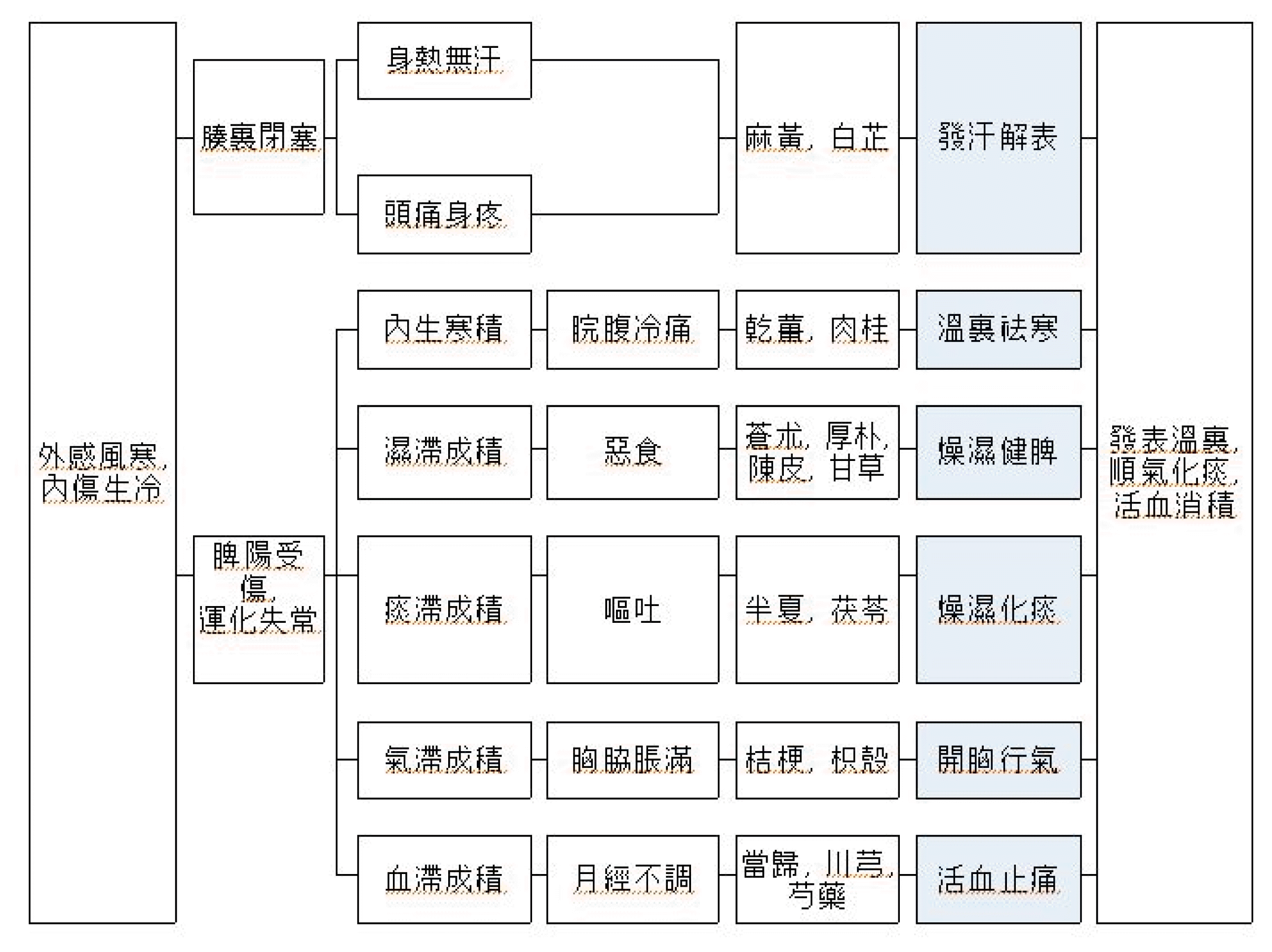
Principles of prescription composition in Ojeok-san
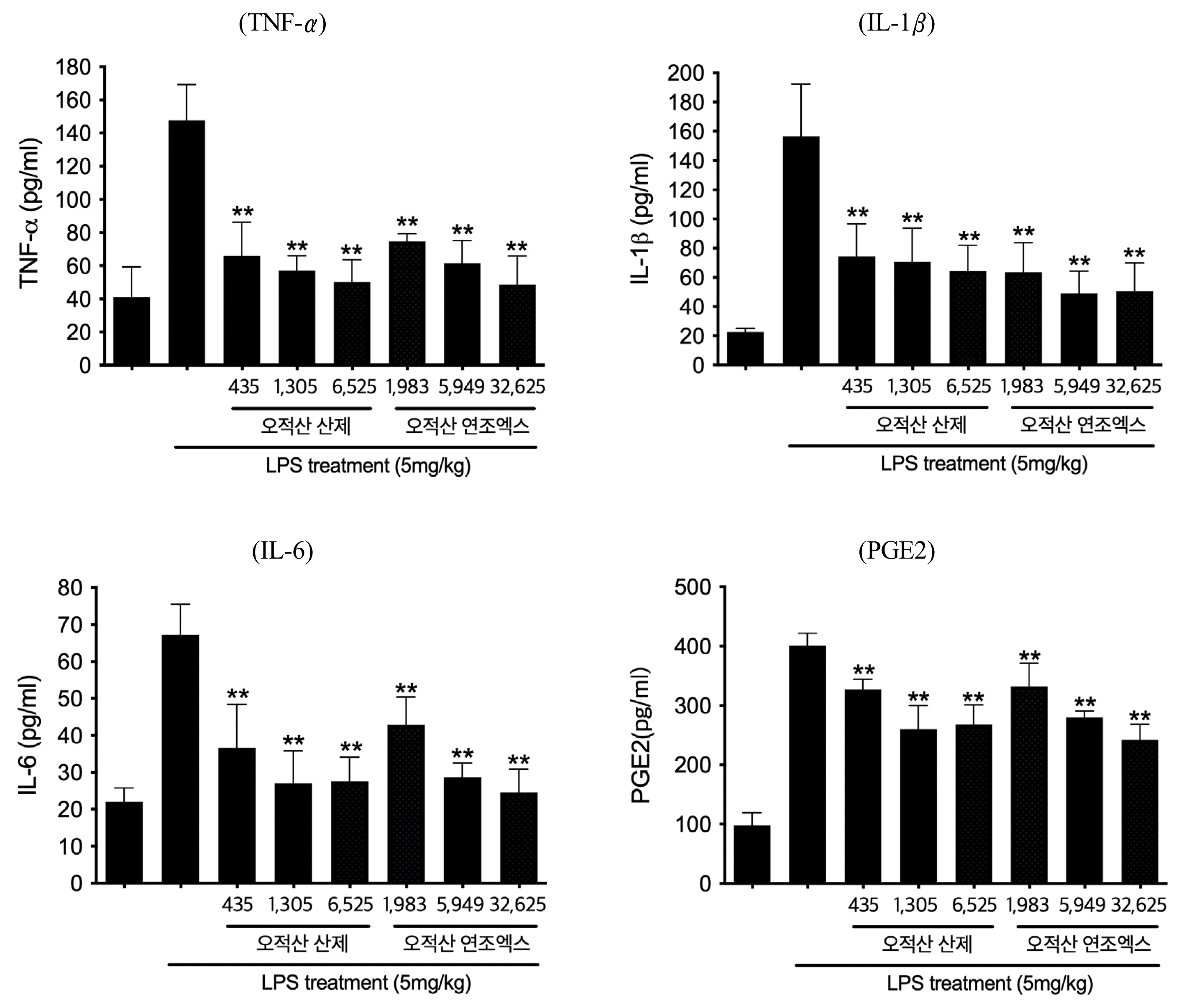
Anti-inflammatory effects between Ojeok-san Extract Powder group and Soft Extract groups in LPS induced inflammatory models (n=5, mean±SD, p: p value of ANOVA test vs. LPS + Vehicle group; *: p<0.05, **: p<0.01)
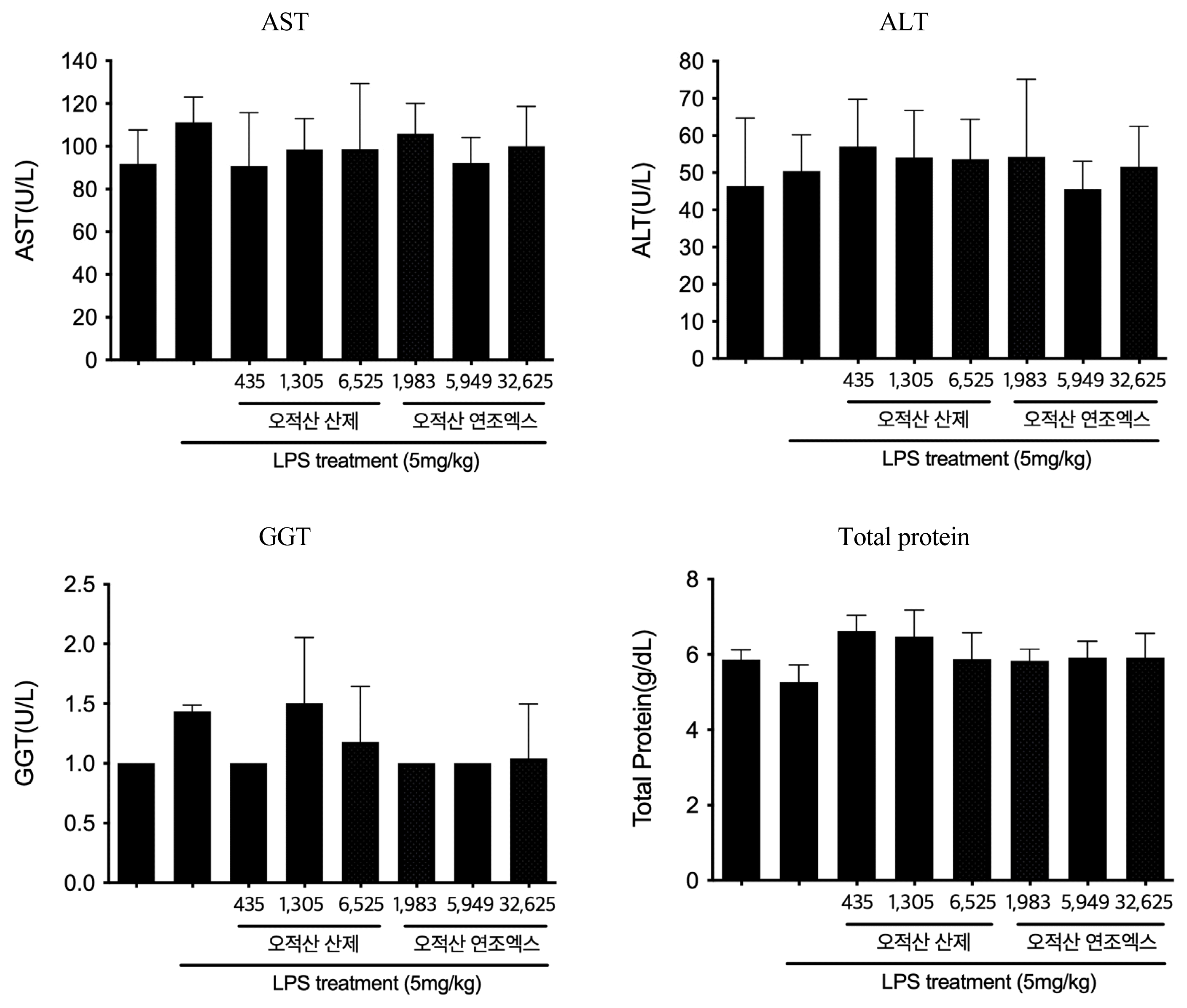
Liver function test results after the injection of LPS according to the groups (n=6, mean±SD)
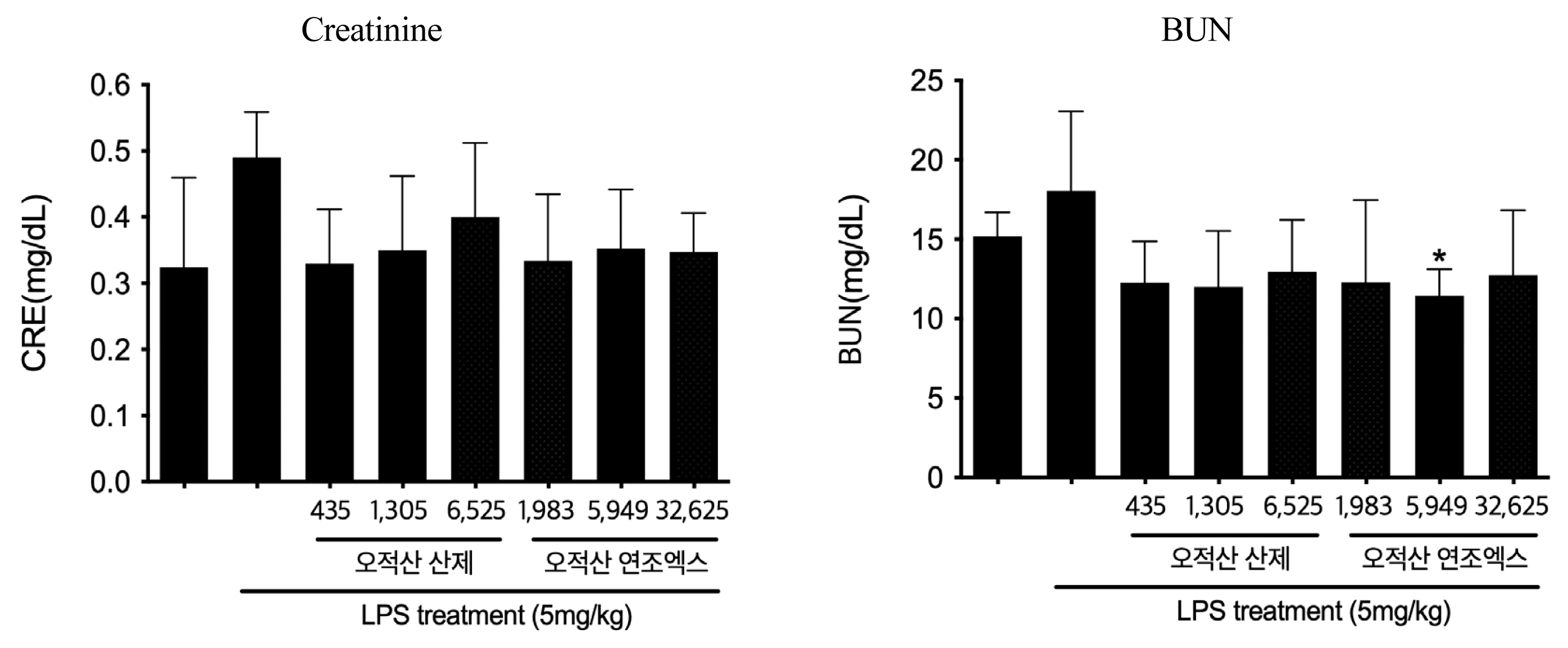
Kidney function test results after the injection of LPS according to the groups
(n=6, mean±SD; p: p value of ANOVA test vs. LPS + Vehicle group ; *: p<0.05)
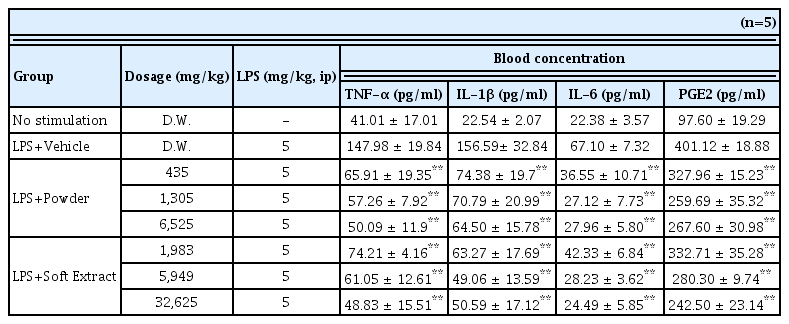
Comparison of anti-inflammatory effects between Ojeok-san Extract Powder group and Soft Extract groups in LPS induced inflammatory models
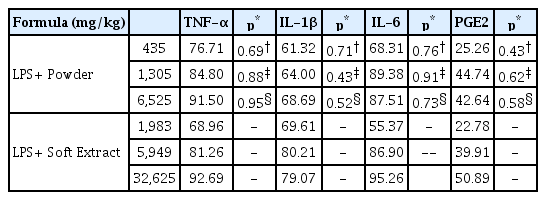
Regulation of Pro-inflammatory cytokines in Ojeok-san Extract powder and Soft Extract groups
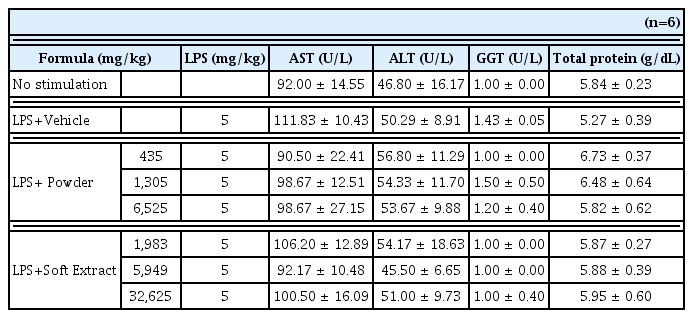
Liver function test values after the injection of LPS according to the groups
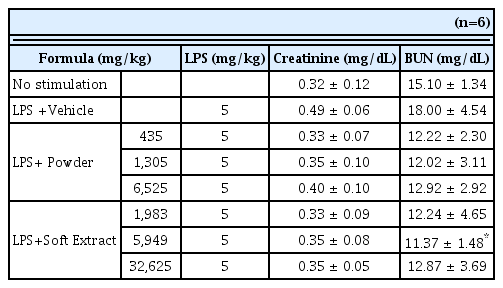
Kidney function test values after the injection of LPS according to the groups
Acknowledgement
This work was supported by a grant from Pharmacological Standardization Project of Traditional Korean Medicine by Ministry of Health and welfare (MOHW) and JeollaNamdo, Republic of Korea.